
A mountain, a plain and a water that is neither sea nor land
Eighteen thousand square kilometres, from the 3,300 metres of the Marmolada to sea level.
The Veneto reads from top to bottom. At the top are the Belluno Dolomites, a Unesco site; below them the Prealps with their plateaus; then a band of isolated hills rising out of the flat, the Euganean and Berici hills, which are extinct volcanoes; and finally the plain, which takes up more than half the territory and reaches the sea without a step.

The rivers
Many come down, almost parallel: the Adige, the second longest river in Italy, the Piave, the Brenta, the Bacchiglione, the Livenza. The Po marks the southern boundary and empties through its delta, which is in the province of Rovigo. All these watercourses have been embanked for centuries, and the network of canals and sluices that regulates the plain is the work of the Republic of Venice.
The lagoon
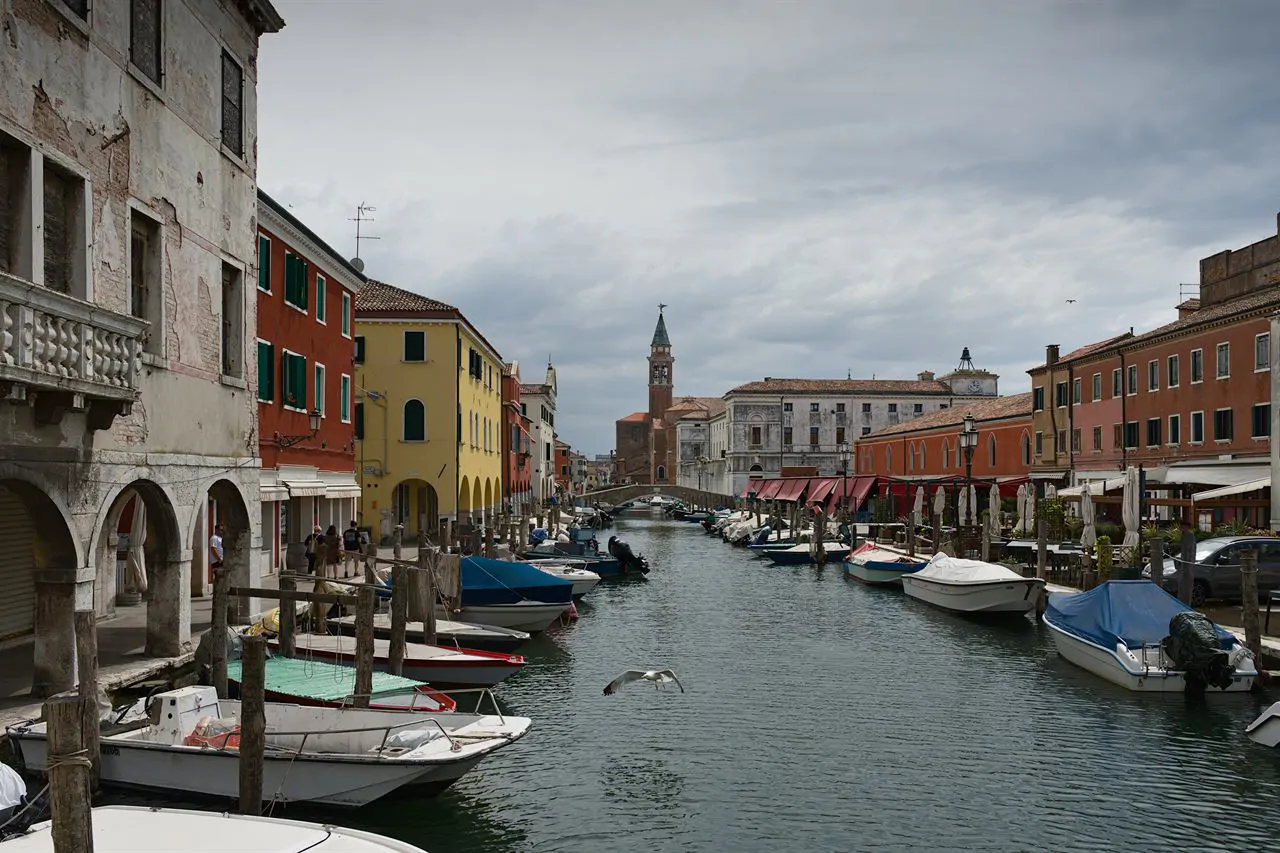
The Venice lagoon is the largest in the Mediterranean: five hundred and fifty square kilometres of shallow water, salt marsh, channels and islands, separated from the sea by three inlets. It is not a natural accident left to itself: Venice worked on it for centuries, diverting the rivers that were silting it up. Since 2020 the gates of the Mose close the inlets when the tide runs too high.
The coast and the delta
The shoreline is low and sandy for all hundred and sixty kilometres, with dune ridges and pine woods behind: it is on this strip that the campsites stand. To the south, the Po delta is a world apart, made of lagoons, fishing valleys, embankments and reed beds, a regional park since 1997 and a Unesco biosphere reserve.
The mountains
The Belluno Dolomites take in the Tre Cime di Lavaredo on the border, the Civetta, the Pelmo, the Antelao and the Pale di San Martino; the Marmolada, which marks the border with Trentino, reaches 3,343 metres and is the highest summit of all the Dolomites. Further south the plateaus of Asiago and the Cansiglio are lower and far more wooded.